
Quibi Wasn't Wrong.
It Was Six Years Early.
Notes from a panel at SET Expo, São Paulo
SET Expo draws the kind of crowd that has heard every "the future of streaming is..." pitch there is, the kind of room where you can tell within the first minute whether people have already decided to tune out. I didn't want to open with a thesis. I opened with a joke.
Quibi is the safe opener in any media talk. I've used it myself, more than once, and it usually gets the same knowing, slightly tired laugh an industry gives when you mention its most expensive cautionary tale. Jeffrey Katzenberg and Meg Whitman raised $1.75 billion in April 2020 on one idea: people want premium, story-driven video in a vertical frame, in short chapters, on their phone. Six months later it was dead.
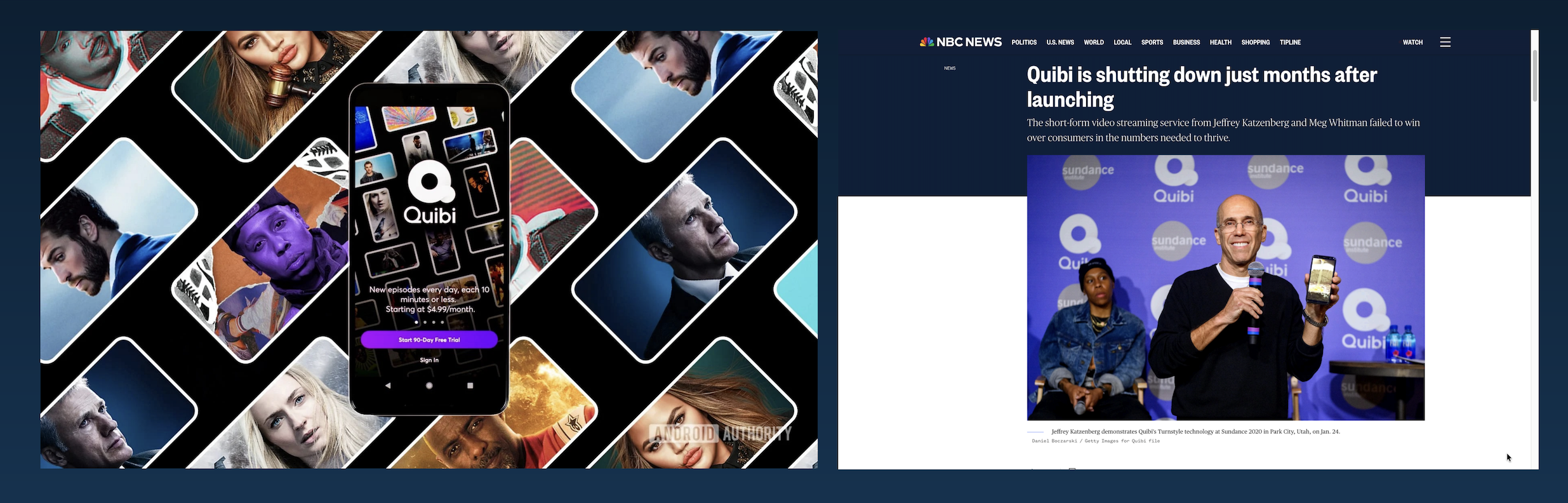
This time I didn't let the laugh sit. I told them I'd changed my mind about what actually happened, and that most of us who laughed were now quietly building the same thing Quibi tried to build, just later, and with a library behind us.
Quibi wasn't wrong about the format. It was wrong about the sequence.
They tried to sell people a habit before the habit existed. No library behind them, no algorithm to distribute them, a subscription paywall standing in front of a behavior that hadn't formed yet. They built the destination before there was any demand to fill it. Six years on, the demand isn't in question anymore. It's the baseline. And the companies with the real advantage aren't the ones chasing the newest format. They're the ones who were already sitting on decades of footage and didn't know it.
That's the case I made on that stage, and it's the case I want to make again here, with more room to actually walk through why.
The number that made the argument concrete
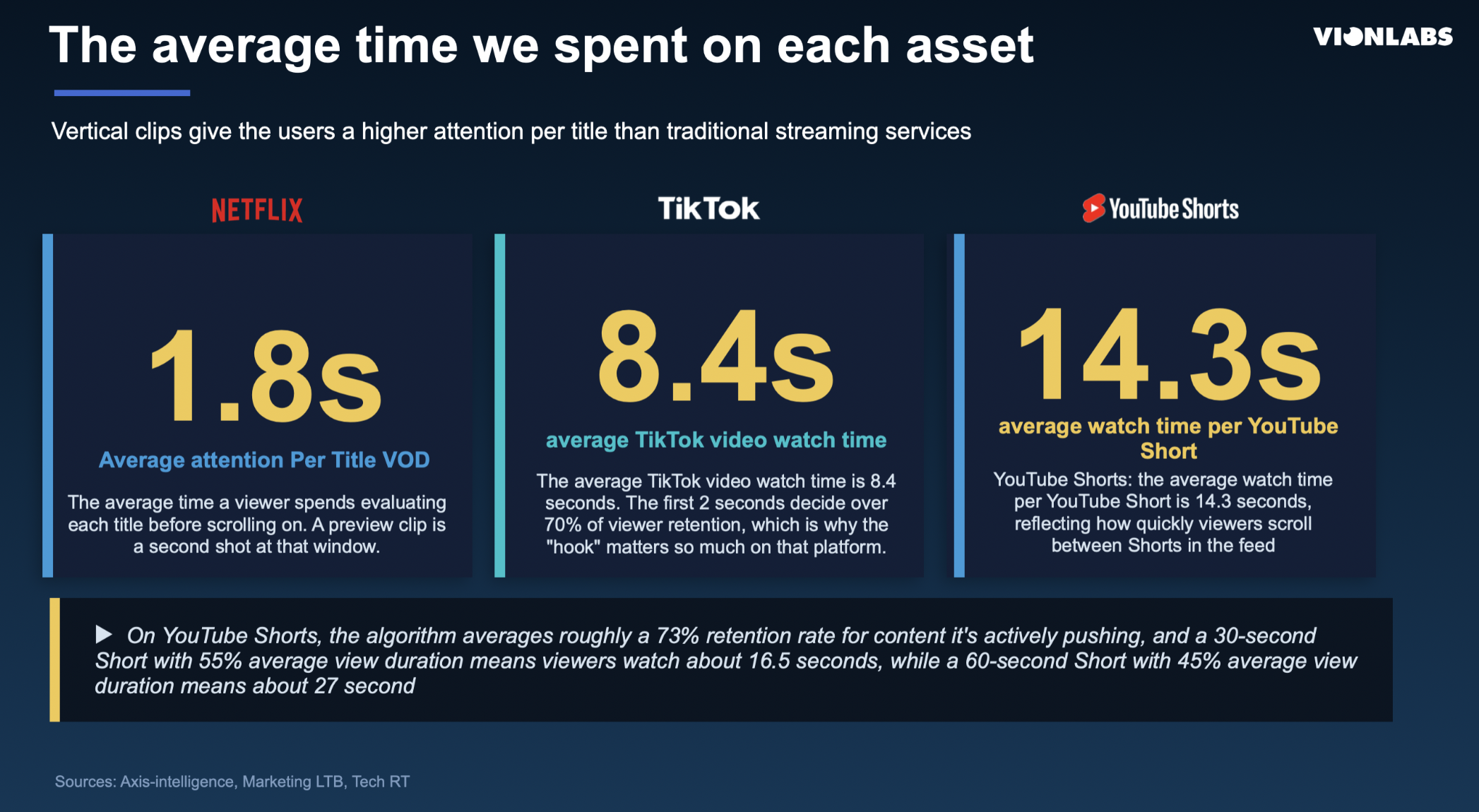
The rest of this talk rests on numbers people in that industry have mostly already accepted in the abstract. The one I built specifically to make it concrete was an attention-span comparison, because there's a difference between agreeing that "vertical performs better" and seeing exactly how much runway a viewer actually gives you before deciding.
We'd pulled it together specifically for the talk, and hadn't published it before: the average time a viewer spends on a single piece of content before moving on, by platform. On Netflix, browsing a VOD title, that's about 1.8 seconds. On TikTok, per video, about 8.4. On YouTube Shorts, 14.3. A traditional streaming thumbnail gets less than two seconds to make its entire case before someone scrolls past it forever. A vertical clip gets four to eight times longer to do the same job. That gap is the actual argument. Not that vertical works, most people in that industry stopped debating that a while ago, but that the gap between formats is bigger than most internal decks admit.
It sits on top of a more basic shift that's easy to say and harder to really sit with: 79% of all video views are now mobile, and adults globally spend more time watching vertical video in a week, around six and a half hours, than they spend on TV and streaming combined. The phone isn't the second screen anymore. For most of the people in that room's own audiences, it's the only screen that matters. And the format itself isn't just more habitual, it's structurally better at holding attention: 9:16 clips complete at roughly 76% on mobile against about 54% for the same content in 16:9, a difference that has nothing to do with taste and everything to do with a full-screen frame with no wasted pixels. Micro-drama is the proof this scales into real revenue, not just watch time: a category that barely existed when Quibi died grew into a $14 billion industry this year, and its apps now beat Netflix and Disney+ on daily mobile time per user.
Swiping is the new zapping
The slide behind this section is the one I'd actually ask you to sit with longest, more than any single stat in this piece. It's a simple generational timeline, and I built it because I think it reframes something people usually treat as a taste preference into something closer to a hardware difference in how a generation is wired to move through content.
Every generation has had its own default way of navigating. Boomers zapped between a handful of linear channels, because that's what the technology in front of them allowed. Gen X got the first hybrid experience, linear TV sitting alongside early on-demand. Millennials were the first generation to fully embrace choosing what to watch and when, rather than what was scheduled for them. Gen Z and Gen Alpha never inherited either of those defaults. They were born straight into algorithmically-driven, personalization-first feeds, and the unit they navigate by isn't a channel or even a title. It's a swipe.
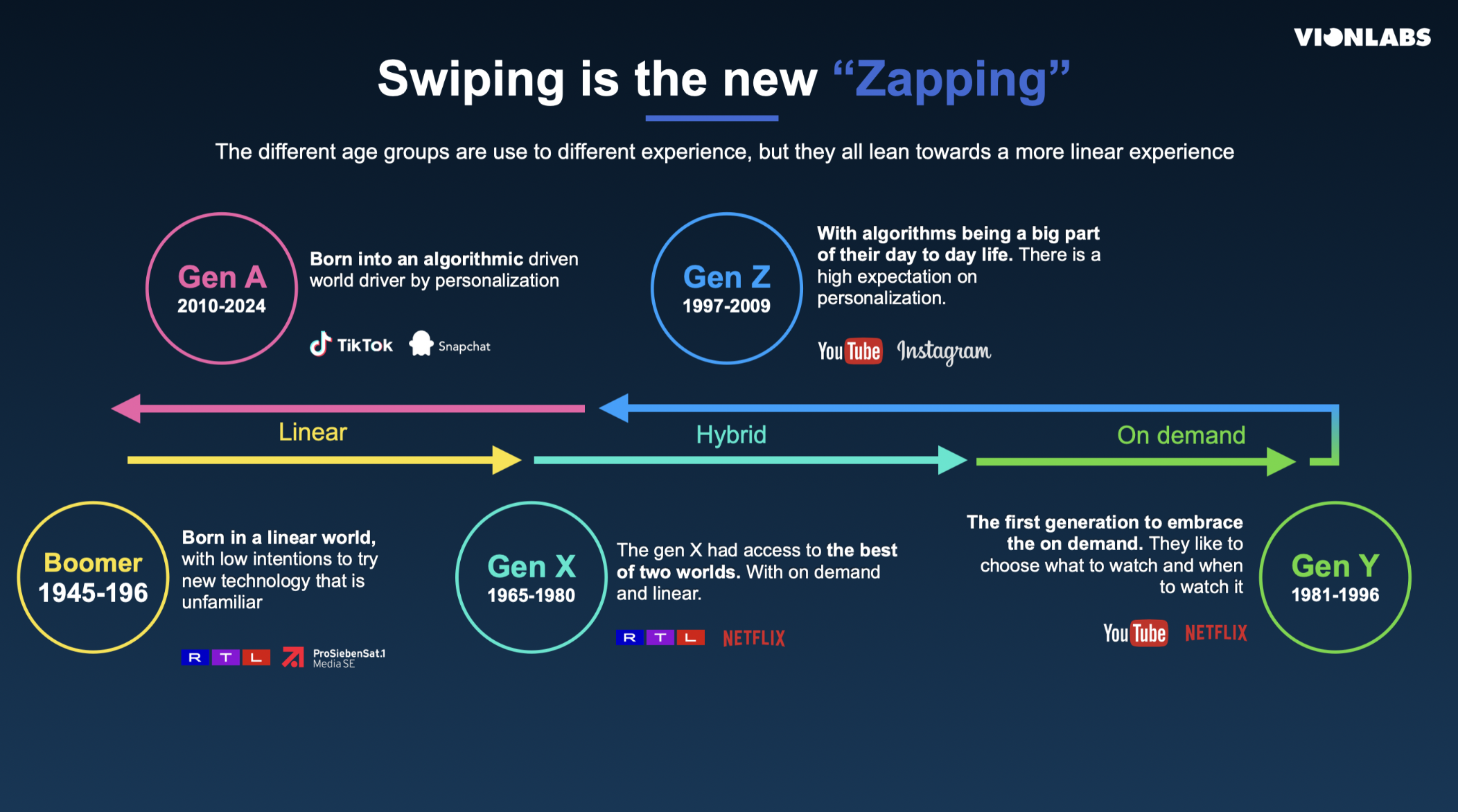
Swiping is the new zapping. Not a preference, a default. It's shaping what "watching something" means before that generation ever opens a dedicated streaming app, and I think it's the single most under-discussed fact in every roadmap conversation I have with media executives. If your platform still assumes people arrive already knowing what they want to watch, you're designing for a generation that's already gone.
The gap nobody has a clean answer for
If discovery has genuinely moved to social, why hasn't distribution caught up? I don't have a fully satisfying answer to that, and I said so on stage. Pretending otherwise would be worse than admitting the industry is behind here.
More than half of viewers between thirteen and thirty-four say they discover new shows and movies from clips on social media rather than trailers or posters. Among Gen Z specifically, that number is 71%. People are finding what to watch inside a feed that has nothing to do with the platform they'll eventually watch it on.
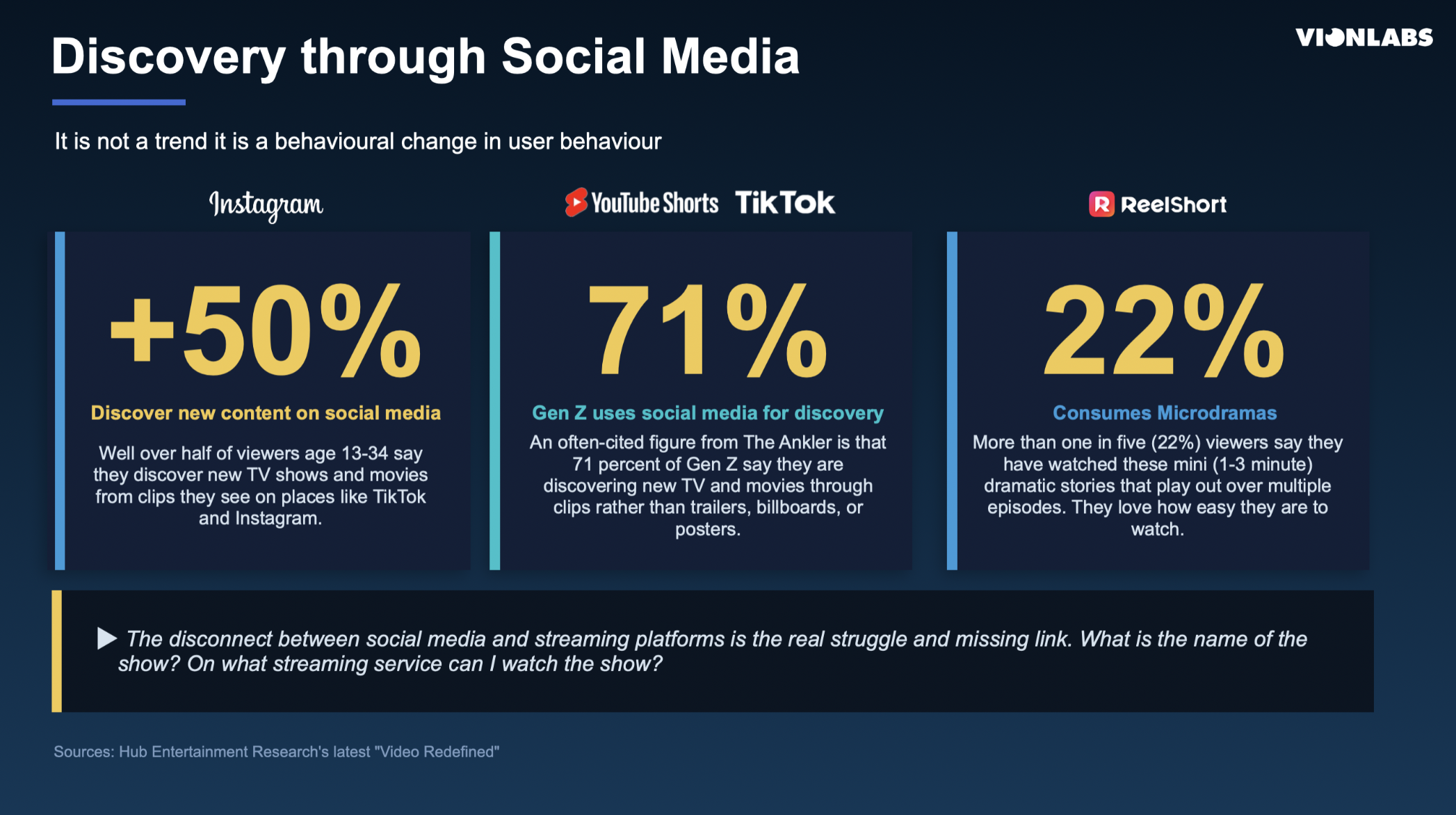
The line I put on a slide is, I think, the honest version of the problem: the disconnect between social media and streaming platforms is the real struggle here. What is the name of the show? Where can I actually watch it? A viewer can watch a forty-second clip pulled from your catalog, love it, and have no path back to the full title on your platform at all. Every media company still pouring resources into polishing trailers while that gap sits open is optimizing the wrong asset.
What the last five months actually proved
I didn't set out to convince anyone that vertical mattered. That argument barely needs making anymore. What I wanted to show was how fast the timeline had actually compressed, because laid out five months at a time, back to back, it reads differently than it does scattered across a year of separate headlines.
Disney announced short-form on Disney+ at CES in January, building on ESPN Verts. By March, Disney+ Verts had launched in the US with original vertical shorts following. In April, Netflix launched Clips, a vertical feed spanning every genre, alongside a fifteen-second clipping tool for users. By May, Amazon Prime Video had added its own vertical feed and Peacock was running vertical NBA broadcasts. Across the first half of the year, Banijay, Fremantle, and All3Media all entered micro-drama through RoseBerry, and Fox took an equity stake in MyDrama.
The detail I kept coming back to on stage was the Netflix clipping tool specifically, because it's not really a product decision. It's an admission. Netflix built a tool for users to do something the platform had spent years trying to keep contained to official channels. That's a company looking at behavior it can't stop and deciding to host it instead of fighting it. The consequence runs deeper than any single feature. Vertical stops being something bolted on after the fact. Greenlights now assume 9:16 assets exist from day one. Archives have to become supply chains that are readable at the scene level, not just the title level. Editorial teams shift from cutting every clip by hand to directing a system that proposes candidates for them to choose from.
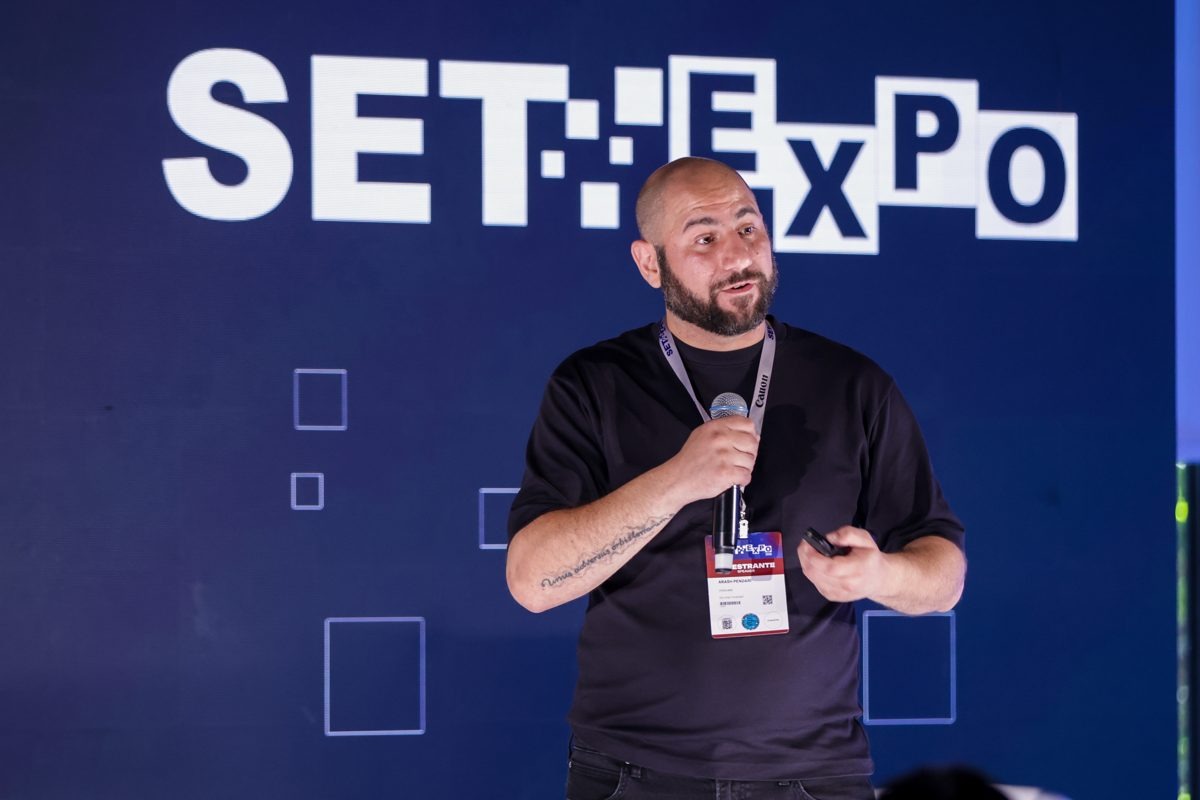
Why I built the whole second half of the talk around Brazil
I could have given a version of this talk anywhere, and the data on mobile viewing and vertical completion rates would have held up the same way. I built the LatAm section specifically for that room, because standing in São Paulo and talking about a trend happening somewhere else would have been a strange choice, and because it's simply true that this is the wrong place to treat Brazil as a footnote.
-3.png)
Brazil is a top-three market for essentially every major vertical feed that exists: roughly 131 million TikTok ad reach, the third-largest in the world, around 135 million Instagram users, and around 140 million on YouTube. One country carrying three of the largest 9:16 audiences on the planet. Seventy percent of Instagram time in Brazil is now spent in Reels, and Brazil is already one of Instagram's biggest markets outright, so the default screen there isn't shifting toward vertical, it already is vertical. LatAm short-drama installs grew more than nine hundred percent year over year in the first quarter of this year alone, the fastest growth of any region on Earth, and Brazil is ReelShort's single largest download market, ahead of the United States. None of this is imported behavior, either. Globo is producing vertical novelas for Globoplay directly and has already launched Globopop, and TikTok launched PineDrama in Brazil with entirely local originals.
I told the room something I actually believe rather than something that sounded good on a slide: if you want to see what the rest of the world's viewing habits look like in two years, don't look at a market report. Look at what a twenty-two-year-old in that city does with their phone tonight. It's a big claim, and it deserves the obvious caveat: some of Brazil's growth is a function of data cost and device access catching up faster than in mature markets, not pure appetite. That's fair, and worth holding alongside the headline number rather than instead of it.
The part that sounds like an argument against AI and isn't
Generation cost for video has collapsed to close to nothing. Anyone in that audience's own comments section can produce something competent-looking in minutes, and audiences noticed this shift faster than most of the industry did. Preference for AI-generated creator content actually fell, from 60% in 2023 down to 26% now, not because the output got worse, but because the sheer volume made it stop feeling special. More than 30% of the recommendations a new YouTube user gets served are now AI-generated or otherwise low-effort content, and close to half of all social mentions of brand AI content carry a negative sentiment. "Slop" was Merriam-Webster's word of the year last year, which is its own kind of verdict.
What that flood actually does is push differentiation somewhere a feed can't reach on its own: owned IP, real archives, real creators with real faces, story worlds that carry history, and a level of structured knowledge about your own content that a generic model has no access to. That's the asset almost everyone in that room already owned and almost nobody in that room could actually search.
The archive nobody's treating as an asset yet
I was careful about this one on stage, because it's easy to overstate. The archive itself is not a strategy. It's raw material, and right now most companies are paying to keep that material in the dark rather than using it.
Twilight is the example I come back to most, because it's almost absurd on its face: a saga that ended in 2012, powered back into all five of Netflix's top movie slots in 2021 on the strength of over two billion TikTok views, and did it again in May of this year, leading the entire Top 10 for nearly a month. A seventeen-year-old franchise, revived twice, entirely through clips made by people who didn't own the rights. Hitchcock's The Lodger, a 1927 silent film, was fully recut as a vertical micro-drama and pulled in more than five million viewers over six months, proof that even a hundred-year-old archive can carry a genuinely new narrative if somebody can actually find the beats worth cutting. The commercial side is already moving too: Fox and Dhar Mann built forty vertical titles out of a single library deal for MyDrama, and Paramount, Lionsgate, and Hallmark are all feeding catalog into ReelShort now. Little Dot Studios has paid out more than one hundred million dollars in royalties to rights holders over three years, almost entirely on the back of archive programming for YouTube and social. That's not a projection. That's a company doing this today, at scale, while most of the industry still carries its archive on the books as a depreciating cost.
The clip that becomes the whole catalog
This is the mechanic I think deserves to be printed out and put on a wall somewhere, because it's the one that changes how you think about everything upstream of it. Suits ended in 2019. In 2023, four years later, it set the all-time Nielsen annual viewing record: 57.7 billion minutes, weekly viewing jumping roughly tenfold from 191 million to 1.9 billion minutes once it landed on Netflix, driven almost entirely by clips circulating on social. A fan-made edit of a Wednesday dance scene has 518 million views on YouTube. Netflix's own official upload of that same scene has 69 million. The fan edit wasn't even set to music from the show. It used "Bloody Mary," an eleven-year-old song that the edit alone pushed back onto the Hot 100.
There are three things sitting inside those two numbers that I think matter more than the numbers themselves. A single scene, cut well, can resurrect an entire catalog on its own. The audience is usually doing that cutting before the studio ever gets to it, and they're the ones capturing the reach and, often, the commercial upside when they do. And that upside lands wherever the rights happen to sit, which is not always with the people who made the show. Knowing in advance which moments in your own library are capable of doing that is the entire difference between owning that flywheel and simply watching it happen around you.
The craft underneath all of it
None of this works if the clip itself is careless, and the craft involved is genuinely measurable rather than a matter of instinct. Seventy-one percent of TikTok users decide whether to keep watching inside the first three seconds, and sixty percent of all drop-off happens in that same three-second window. If the hook doesn't land, nothing that comes after it gets a chance to matter. Roughly half of a platform's ranking decision comes down to watch time and completion alone. Eighty-five percent of mobile video gets watched with the sound off, which is why captions alone can cut ad-skip rates from 41% down to 18% and add real reach and view-time on top of that. And length isn't a stylistic choice either. TikTok rewards eleven to eighteen seconds, Shorts fifty to fifty-eight, Reels sixty to ninety, each platform training its own rhythm into its audience.
The practical playbook that falls out of that: open mid-action rather than with a setup, keep any branding out of the first three seconds since moving it out lifts retention by fifteen to thirty percent, make one promise clearly and immediately, put text in the first frame for the vast majority watching muted, and end on a loop, since replays past 100% retention are the single strongest distribution signal a feed can send. And underneath the craft sits a discipline that's easy to skip and expensive to skip: version, don't repost. One real moment becomes a fifteen-second TikTok cut, a fifty-five-second Short, and a seventy-five-second Reel, each with its own hook and pacing rather than one export stretched three ways. Do that across a forty-thousand-hour library, in six languages, every week, and you've stopped talking about a staffing problem. You're talking about a systems problem, and most teams are still trying to solve it with headcount.
Not every company in that room needed the same answer
I said this part directly, because panels too often flatten it into one answer: the right vertical strategy depends entirely on what a company already owns, and a fifteen-person regional broadcaster and a global media group are not fighting the same fight.
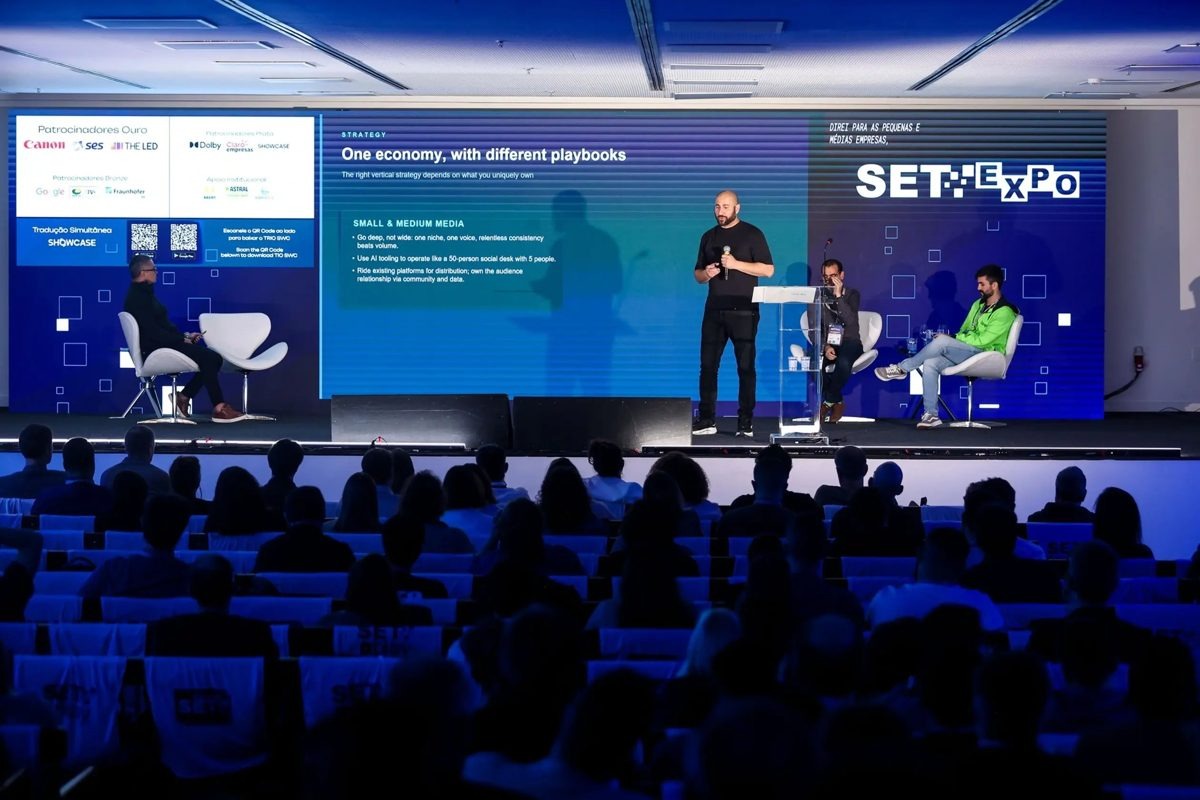
If you're small or mid-sized, the honest advice is to go deep rather than wide: one niche, one voice, and a relentless consistency that beats raw volume every time. Use AI tooling to run like a fifty-person social desk with five actual people on payroll. Let the big platforms carry your distribution, and put your energy into owning the audience relationship itself, through community and data, rather than trying to own infrastructure you can't afford to build. If you're a large media group, the shape of the answer changes. Run two engines at once: vertical-native originals alongside systematic derivation from the catalog you already have. Build the content intelligence layer, the scene-level, emotion-level, moment-level data, exactly once, so it can be reused across every brand and market rather than rebuilt team by team. Treat vertical as its own line item with its own metrics, not something that quietly borrows headcount from a marketing budget. Underneath both answers sits the same principle: once production cost trends toward zero, strategy becomes a question of where you can still add value an algorithm can't touch: identity, catalog depth, or sheer operational scale.
Where I'm actually standing when I say all this
It changes how much weight any of this should carry, so it's worth saying plainly. At Vionlabs we spend our working days inside media companies' archives, so none of this is a theory I picked up secondhand from a trend report. It's what happens, over and over, once a team gets a way to search their own catalog at the level of a scene instead of a filename and a folder path.
The pattern repeats itself almost exactly every time. Someone asks a question that used to cost an intern an entire weekend, find every scene where this character is alone on screen, or pull every high-tension moment from the back half of a season, and gets an answer back in roughly the time it takes to type the question. The archive itself hasn't changed at all. What changed is whether anyone could actually get inside it fast enough for the answer to matter. That's the part I care about more than any single feature we've built: an archive that most companies currently book as a depreciating cost becomes, with the right access layer sitting on top of it, a compounding one instead. A clip you can find in ten seconds and correctly reframe for a vertical feed is worth something real. The same clip sitting three folders deep on a hard drive, indexed only by its original air date, is worth nothing at all, regardless of how good the footage actually is. That gap is what we built our tools to close, and I won't pretend it's the only way to close it. I will say it's the reason I trust the argument I made on that stage. I'm not describing something I'm watching happen from a distance. I'm describing what happens on the other side of it, most weeks, for a living.
Where I ended it
I closed on a line I've been sitting with for a while, because the industry keeps getting the actual question backwards. The interesting question was never whether a machine can make the clip. It obviously can, and increasingly can do it well. The interesting question is who decides which story deserves to travel in the first place, and that answer hasn't changed at all.
So the line has to be drawn on purpose. Machines are very good at scale: scene detection and candidate selection across an entire library, subject-aware reframing into vertical, subtitling and dubbing and market-by-market versioning, thumbnails and metadata and compliance packaging, testing dozens of hooks and lengths and covers at a speed no human team could match. Humans are the only ones who can do meaning: the editorial judgment of which stories actually deserve to travel, the brand voice and cultural nuance that shifts market to market, the rights and talent and reputational calls nobody wants a model making alone, the hook itself, because those first two seconds decide most of what happens after, and the final curation that sits as a quality layer on top of whatever the machine proposes. Every editorial team we work with goes through roughly the same shift: from making clips by hand to directing a system that makes candidates for them. The editor's brief becomes the prompt. The machine proposes. The human still decides.
That's not a smaller job for the editor. If anything it's a more serious one. Every hour spent scrubbing a timeline looking for a moment someone already knows exists in there somewhere is an hour not spent on the one thing no model can do in their place, which is judgment.
Quibi's actual mistake was never the vertical frame itself. It was believing the frame alone was the product. Six years later, the frame is table stakes, and the real advantage sits one layer down, in knowing your own content better than anyone else does, and having a way to act on that knowledge at the speed a feed now demands. Almost everyone I shared that stage with is sitting on that advantage right now, whether they've registered it yet or not. Very few of them can currently search it. That gap closes over the next few years either way. The only real question left is who closes it on their own terms, and who has it closed for them by an audience that's already doing the clipping without waiting for permission.
Thank you, São Paulo
None of the above happens without the room it happened in, so before anything else: thank you.
Thank you to SET Expo for the stage, and for building an event that's become one of the real gathering points for broadcasters, studios, platforms, and vendors across Latin America, a place where people show up to actually argue about the same problem instead of just trading keynote slides. It's a genuinely good room to be in, and I mean that as someone who's sat through a lot of panels that weren't.
Thank you to SET Expo for the stage. A room that can hold an audience that size, with working translation booths and a program that pulls people in from across the industry, doesn't happen by accident, and it's the kind of thing you only really appreciate once you're the one standing on it.
Thank you to the moderator and the other panelists I shared that stage with. The best panels are the ones where someone pushes back rather than just nodding along, and this was one of those.
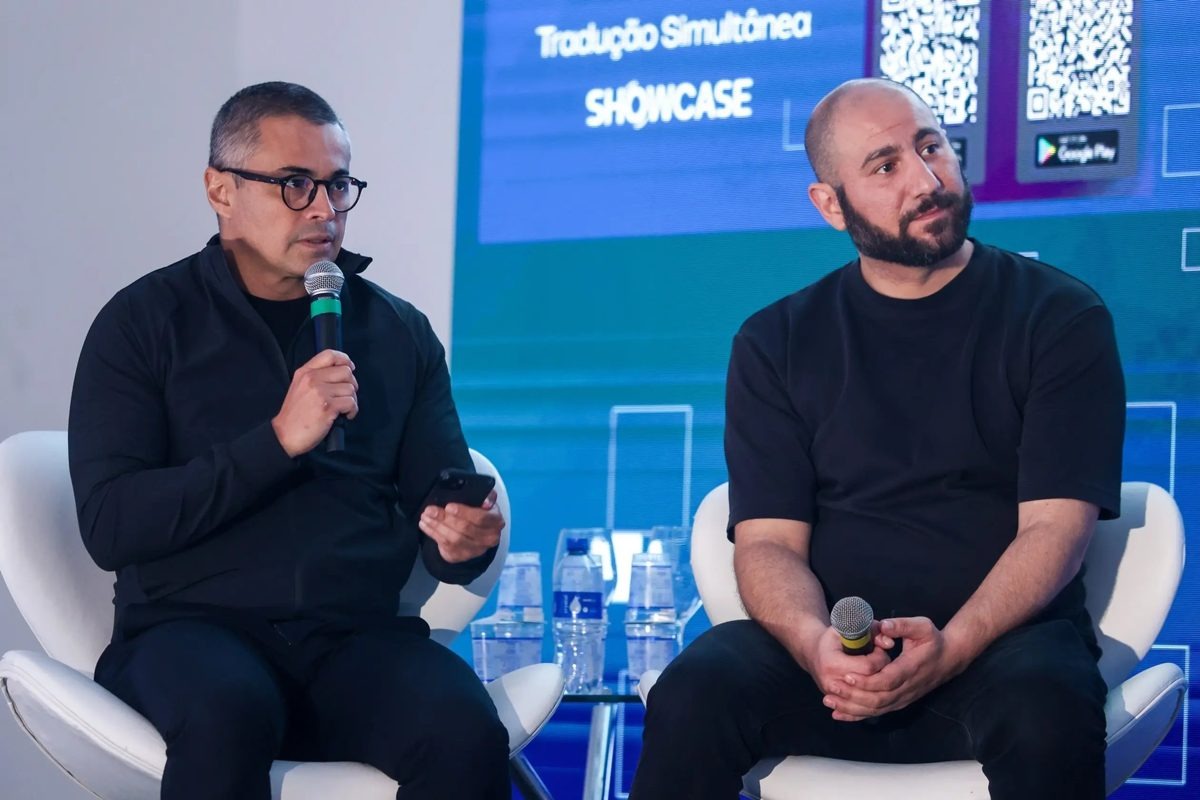
A more personal note to close, because a few people turned this from a speaking slot into a week I'm still thinking about.
Igor Macaubas at Globo, for the invitation that started all of it. A Swedish company flying in to argue about vertical video is not the most obvious booking, thanks for inviting us from Vionlabs.
Marcelo Souza at Globo, who chaired A força do vertical and pushed rather than nodded along. His question, how you produce at scale for vertical instead of just cutting down what you already made, came from someone already doing the work: vertical novelas for Globoplay, Globopop as a home for the format.
Rodolfo Bastos at Globo, for talking about Globopop and giving the industry insight in how to approach the vertical format as a new business unit.
Antoine Morel at UOL, for dragging us back to how any of this actually pays. Format debates are easy, revenue ones are not, and he refused to let us skip that part.
Gustavo Dutra, Hugo N. and Gerson Soares, for the archive session and the preparation behind it. Panels that feel unrehearsed usually aren't.
And the SET Expo team, for an event where everything simply worked, which is the hardest thing to pull off at that scale.
I came to São Paulo with an argument. Brazil is where I found the proof, in Globo's novelas, in TikTok's PineDrama team, in ReelShort's operation here, and mostly in the people above, who were already building the thing I spent an hour on stage saying everyone else needs to start building.
.png)
.png)



